

Built for Critical Programs Where the Process Has to Hold
Uniphase supports OEMs in medical, food and beverage, CPG, and industrial markets where production reliability, quality discipline, and lifecycle performance matter as much as the molded part itself. We focus on programs where engineering, validation, documentation, and uptime shape the customer decision—not just unit price.
ISO
13485:2016
ISO
9001:2015
SQF CERTIFICATION
Level 2
GMP
Certified
ISO
Class 8 Cleanroom
Markets Where Operational Discipline Matters
Our strongest fit is with engineering, operations, quality, and sourcing teams managing programs that cannot tolerate unstable processes, quality escapes, weak documentation, or repeated supplier friction. Across industries, the common denominator is not simply “plastic parts.” It is the need for robust engineering, disciplined operations, and when desired, access to a fully integrated program from tooling through production.
Medical Devices, Diagnostics, and Dental
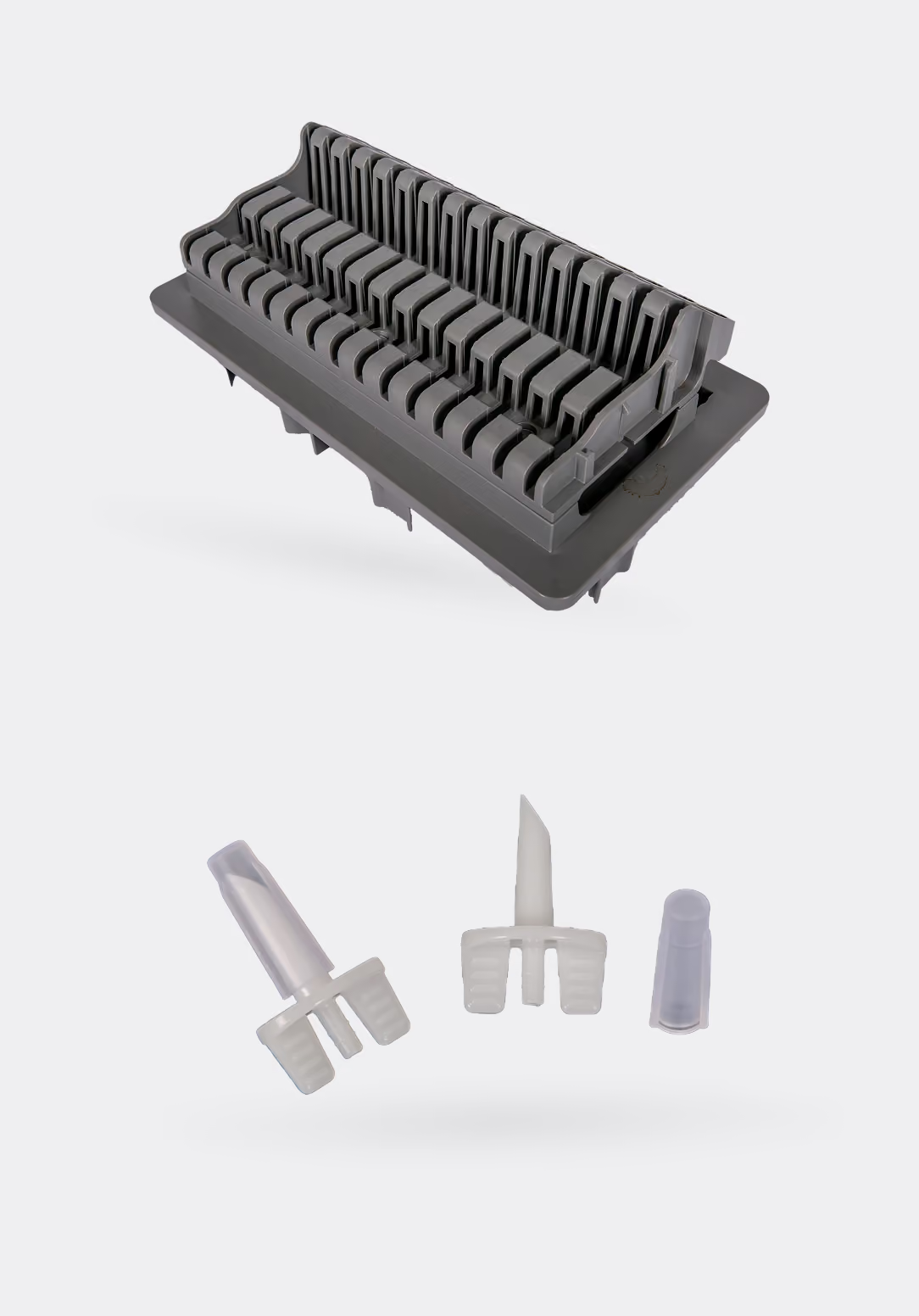
For medical, diagnostic, and dental programs, Uniphase brings the combination of engineering-led molding, process discipline, and ISO 13485-certified operations needed to support highly scrutinized manufacturing environments. These programs often involve tight tolerances, documentation expectations, change control, and internal or external audits that make supplier selection more consequential.
Uniphase is built to help OEM teams move from launch or transfer into validated, stable production with greater confidence. The value is not only in making the part; it is in supporting the operating environment around the part, including traceability, documentation, process control, readiness for quality review, and long-term production accountability.
- Medical devices and components
- Diagnostic and monitoring equipment
- Dental devices and related components
- Regulated or high-consequence programs with strong validation expectations
Food, Beverage, and CPG
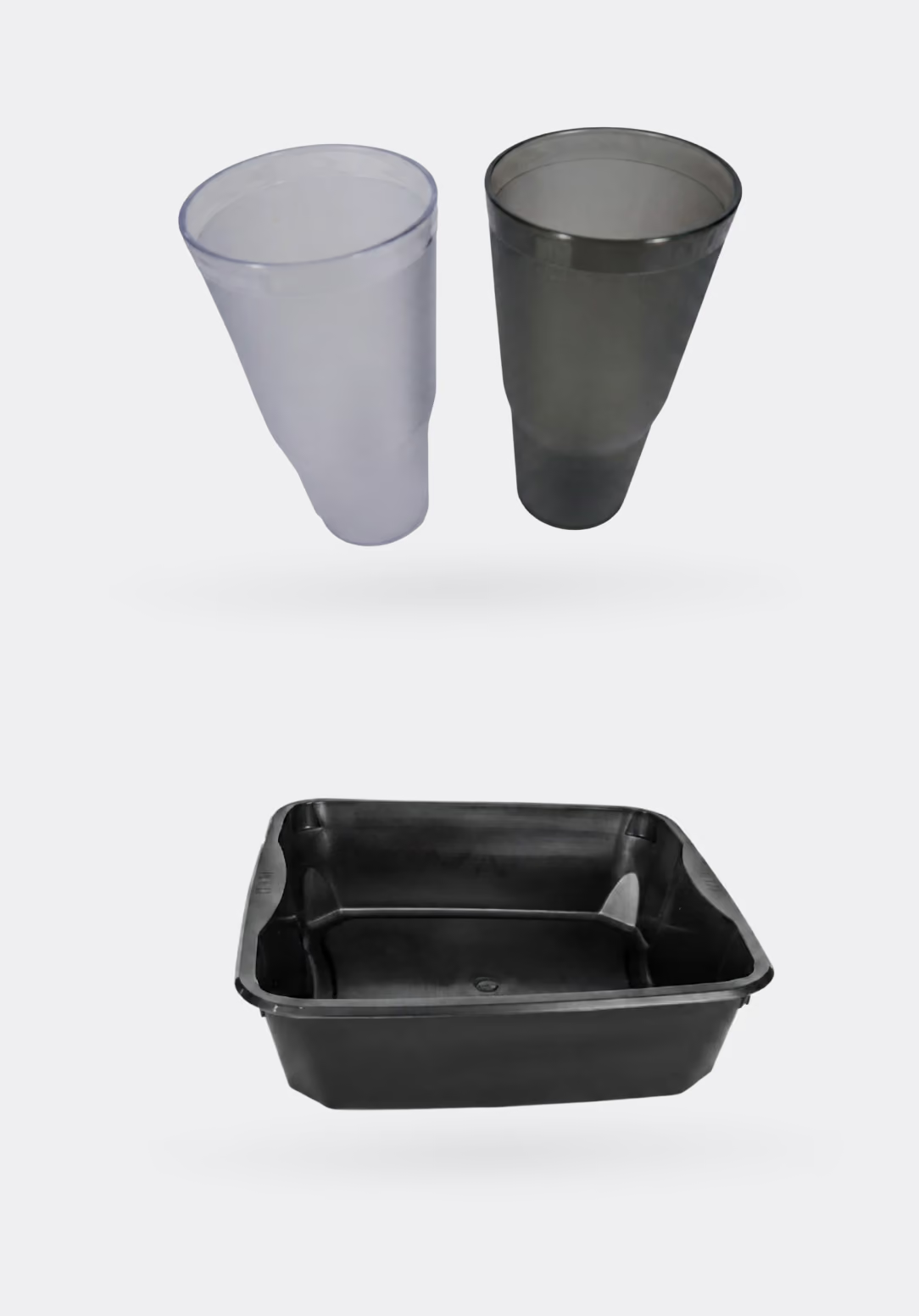
In food, beverage, and CPG environments, the manufacturing challenge often centers on speed, repeatability, packaging performance, and clean, disciplined operations at scale. Uniphase supports programs that need tooling, molding and automation systems capable of protecting throughput, reducing scrap, and operating within SQF-certified and GMP-aligned expectations.
For OEMs in these markets, line performance and supply continuity are essential. A well-run tooling, molding and automation partner helps protect not only quality, but also labor efficiency, uptime, and downstream packaging or assembly performance. And when a program benefits from closer coordination across tooling, automation, and production, Uniphase can support that path inside our fully integrated system.
- Food and beverage packaging components
- CPG packaging and related molded parts
- Programs requiring high-speed, repeatable output
- Production environments where audit readiness and process discipline matter
Industrial and Specialty
Industrial and specialty programs often place a premium on long-running tools, stable processes, automation ROI, and the ability to support evolving production needs over time.
These are not always regulated markets, but they are often unforgiving ones. If the process drifts, costs rise, downtime compounds, and supplier confidence erodes.
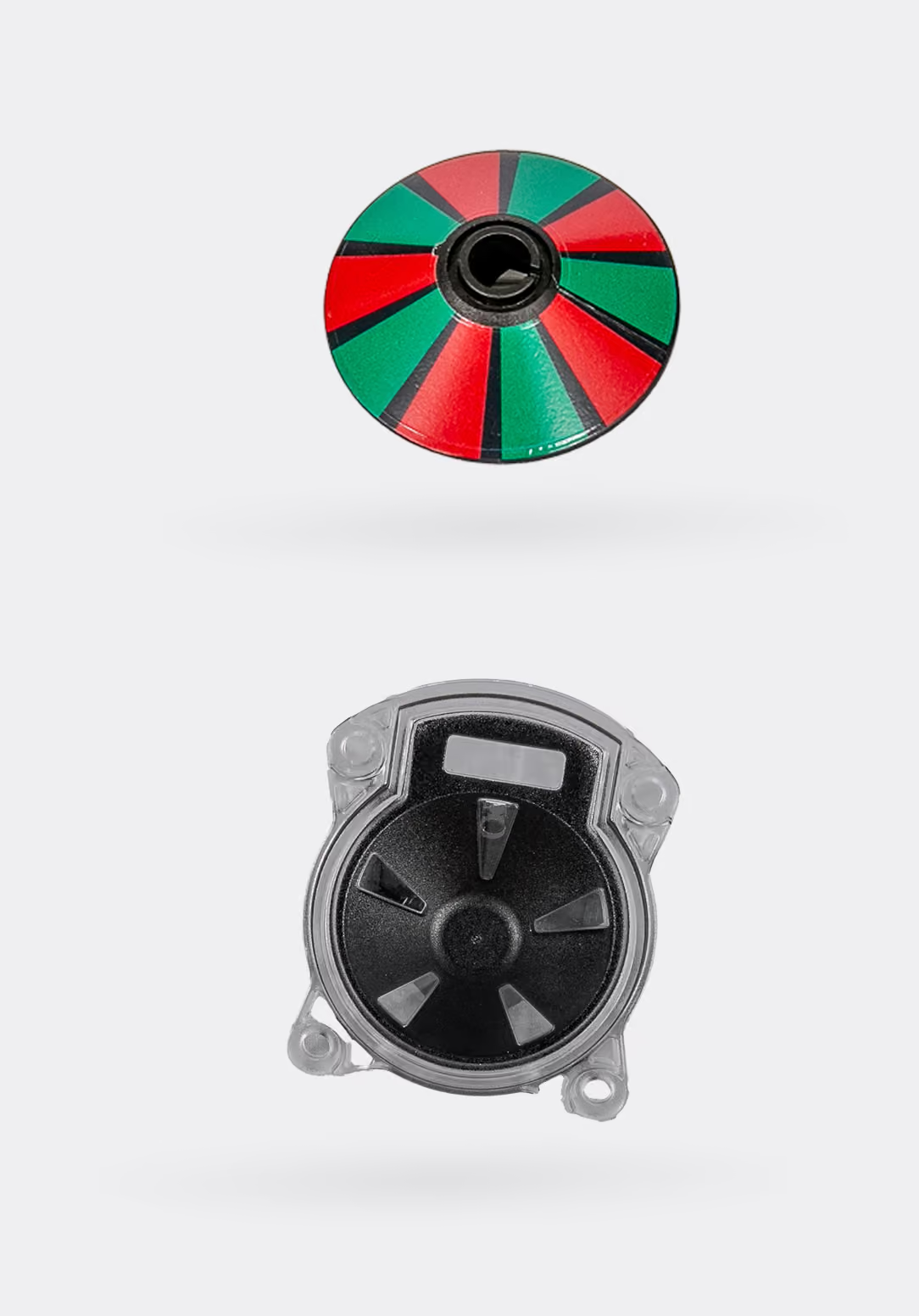
Uniphase supports these applications with engineering-led tooling, molding, automation integration, and lifecycle support built for durability and control. This is especially relevant when customers are balancing performance expectations with cost-per-unit pressure, long production lives, and the need to keep engineering intent connected to real-world output.
- Industrial components and assemblies
- Specialty applications with demanding geometries or materials
- Long-life programs where uptime and process stability drive value
- Transfer or rescue situations where supply continuity is at risk
Why customers choose Uniphase
Across industries, customers typically come to Uniphase when they need:
- A molder that can support validation, documentation, and audited operations where required
- Better control over process stability, uptime, and quality performance
- Automation and end-of-line thinking that improves line economics
- Support for transfer, rescue, or complex launch situations where operational risk is high
- A stronger connection between tooling decisions, production performance, and long-term lifecycle support when program risk makes that continuity valuable

Join Our Newsletter to Stay in Touch
Your information is secure and will never be shared. Privacy Policy